
Community Wealth Building in Action
On Thursday, 13th August, we attended the 4th of the Edinburgh Anchor Network's online Community Wealth Building Sharing Sessions. This sharing session focused on the work being progressed by Fresh Start and Scran Academy.
The session provided a powerful reminder that community wealth building is not merely a policy framework or an economic theory. At its heart, it is about people, relationships, opportunity and dignity. The presentations from Fresh Start and Scran Academy demonstrated how local organisations can create meaningful change by investing in people, communities and local economies in ways that help individuals move from crisis towards confidence, independence and agency.
What struck me most was how both organisations show that community wealth building is often achieved through small, incremental actions that collectively produce significant long term impact. Neither organisation claims to have all the answers to Scotland's social and economic challenges. Instead, they focus on practical solutions, strong partnerships and creating opportunities that allow people to thrive.
Community Wealth Building Beyond Economics
Community wealth building is often discussed in terms of procurement, employment and local economic development. However, the examples shared by Fresh Start and Scran Academy highlighted a broader understanding of wealth.
Wealth is not only financial. It is also confidence, skills, relationships, stability and belonging.
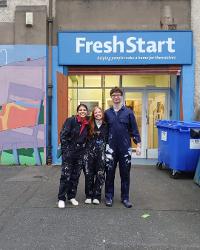
Fresh Start works with people moving on from homelessness, helping them establish homes and rebuild their lives. While providing furniture, appliances and household goods may appear straightforward, the impact goes much deeper. A furnished home becomes a foundation for stability, well-being, and connection. It creates the conditions in which people can begin to focus on employment, education, health and participation in community life.

Similarly, Scran Academy uses food, hospitality and youth work as tools for transformation. Through training, qualifications, work placements and employment opportunities, young people develop skills, confidence and experience that increase their life chances. Their work recognises that employability is not just about getting a job; it is about helping young people believe they have a future and a place within their community.
Both organisations demonstrate that community wealth building must focus not only on creating economic value but also on building human and social capital.
The Importance of Local Multipliers
One of the most compelling discussions during the session centred on the local multiplier effect. The principle is simple: when organisations spend money locally, that money continues to circulate through the community, creating additional economic and social value.
The example shared by North Edinburgh Arts, that for every £1 spent, an additional £2 is generated within the community, illustrates the importance of local spending decisions. Money paid to local suppliers, employees and social enterprises does not disappear from the area. Instead, it is spent again and again in local shops, businesses and services, creating ripples of economic activity.
Fresh Start and Scran Academy embody this principle.
Both organisations create local employment opportunities, purchase goods and services within their communities, and support local people to participate in the economy. Their activities generate benefits that extend far beyond their immediate programmes. The value created is multiplied through stronger local supply chains, increased employment, higher levels of community participation and greater economic resilience.
Community wealth building, therefore, requires organisations to ask not only "what are we buying?" but also "who benefits from our spending?"
Procurement as a Tool for Social Change
Scran Academy's experience operating their cafes at the Royal Hospital for Children and Young People and the NHS Lothian Comely Bank Centre provides a powerful example of how procurement can deliver wider social value.
Traditionally, procurement processes have focused heavily on cost and efficiency. However, community wealth building challenges anchor institutions and public bodies to think differently. It asks them to consider how contracts can create local jobs, improve wellbeing and support social enterprises.
The hospital cafe demonstrates what this can look like in practice. The cafe not only provides a service but also creates flexible employment opportunities for young people progressing through Scran's programmes. At one point, nine young people from Scran's programmes were employed within the cafe at the Royal Hospital, gaining real life work experience in a supportive environment.
This reflects a "triple bottom line" approach, where success is measured not only by financial performance but also by social and community outcomes. The cafe effectively becomes an engine for community wealth building, proving that procurement decisions can unlock opportunities for individuals who might otherwise face barriers to employment.
Relationships Matter
A recurring message from Fresh Start was that successful community wealth building depends on relationships.
Creating systemic change requires trust, credibility and partnership. Rather than approaching public bodies as adversaries, organisations must build constructive relationships and present solutions to shared challenges.
Fresh Start's experience working with the City of Edinburgh Council highlighted the importance of strategic buy in and long term collaboration. Change rarely happens overnight. It is built through patient relationship building, demonstrating value and developing a reputation as a trusted partner.
This reflects one of the most important lessons from community wealth building: systems change is fundamentally relational. Policies are important, but partnerships are what bring those policies to life.
Moving from Crisis to Agency
Perhaps the most powerful theme emerging from both presentations was the idea of helping people move from crisis and survival towards thriving and agency.
Fresh Start supports people at moments of significant vulnerability, helping them establish secure foundations from which they can rebuild their lives. Scran Academy supports young people to discover their strengths and aspirations, creating pathways into education, training and employment.
In both cases, the ultimate goal is not dependency but empowerment.
Community wealth building succeeds when people are able to influence their own futures, earn a real Living Wage, access good working conditions and participate fully in their communities. It is about creating circumstances in which people can exercise agency and have genuine opportunities to shape their lives.
A Vision for Long Term Change
The session reinforced that community wealth building should be seen as a long-term change management project rather than a collection of isolated initiatives.
Projects such as the planned developments in West Pilton, including opportunities for Scran Academy to create new community-focused enterprises, demonstrate how local investment can create lasting benefits for local people. These initiatives may seem modest individually, but together they contribute to a broader vision of inclusive and sustainable economic development.
Fresh Start and Scran Academy remind us that community wealth building happens at the local level. It is granular, practical and deeply human. It happens when organisations choose to pay fair wages, purchase locally, create opportunities for people facing barriers and work collaboratively to solve shared problems.
Most importantly, it happens when communities are viewed not as places of need, but as places of potential.
Through their commitment to people, partnership and place, Fresh Start and Scran Academy offer compelling examples of how community wealth building can move beyond theory and become a lived reality, creating stronger communities where more people have the opportunity not just to survive, but to thrive.
The Edinburgh Anchor Network is back to deliver another session focusing on Community Wealth Building. This event is in person at North Edinburgh Arts on Tuesday, the 22nd of September: details here.